
I have never thought the f/8 part was the point.
Of course it matters. The camera is set at a practical, competent place, so the photographer isn’t distracted by settings while the moment slips by. There is nothing mystical about it. The phrase endures not because of f/8, but because of what follows.
“Be there.”
That sounds simple until you try to live it out with a camera.
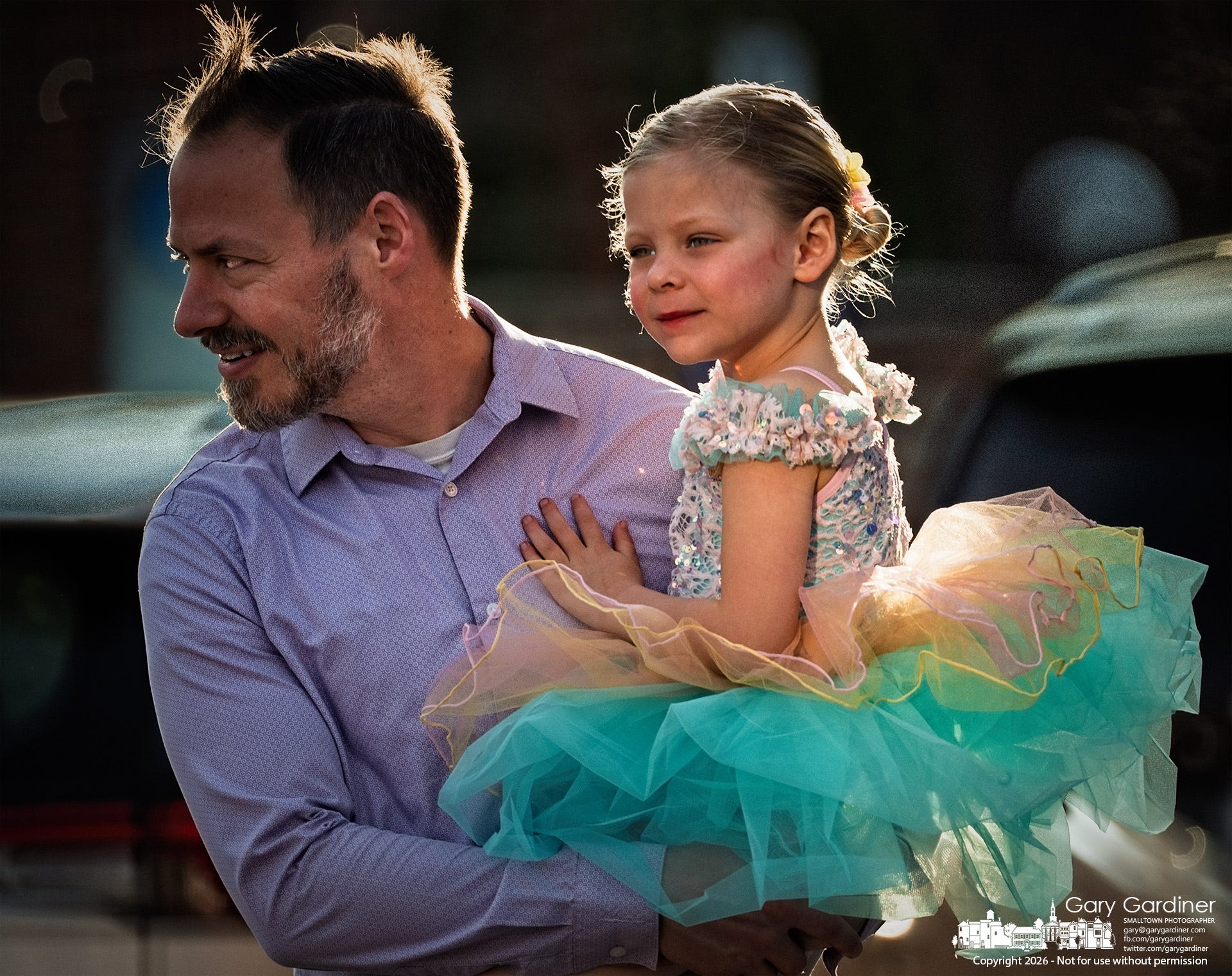
A man carried a young girl across the street in late afternoon light. At first, the picture seemed to be about the two of them, about motion, about the tenderness of a child being carried at the end of the day. But what made the frame happen was smaller and more exact than that. She had just stepped into a stream of sunset light reflected from windows across the street. That reflected light caught her hair, her cheek, and the edge of her dress, lifting her away from the darker background. The father was just outside it. He was still carrying her, still central to the picture, but he remained in a different register of light. They moved together, but the light described them differently.
That was the picture.
Not father and daughter in the abstract, but that brief division cast by reflected sunset. Then, a moment: one figure stepped into the light. The other remained outside that light. It lasted barely an instant. The camera had to be ready. More crucially, the eye even more so. That is what “being there” demands: not just presence, but attention, honed by practice. Vigilance to subtle shifts. A readiness to trust that what matters may emerge quietly.
Other times, the picture asks for less.
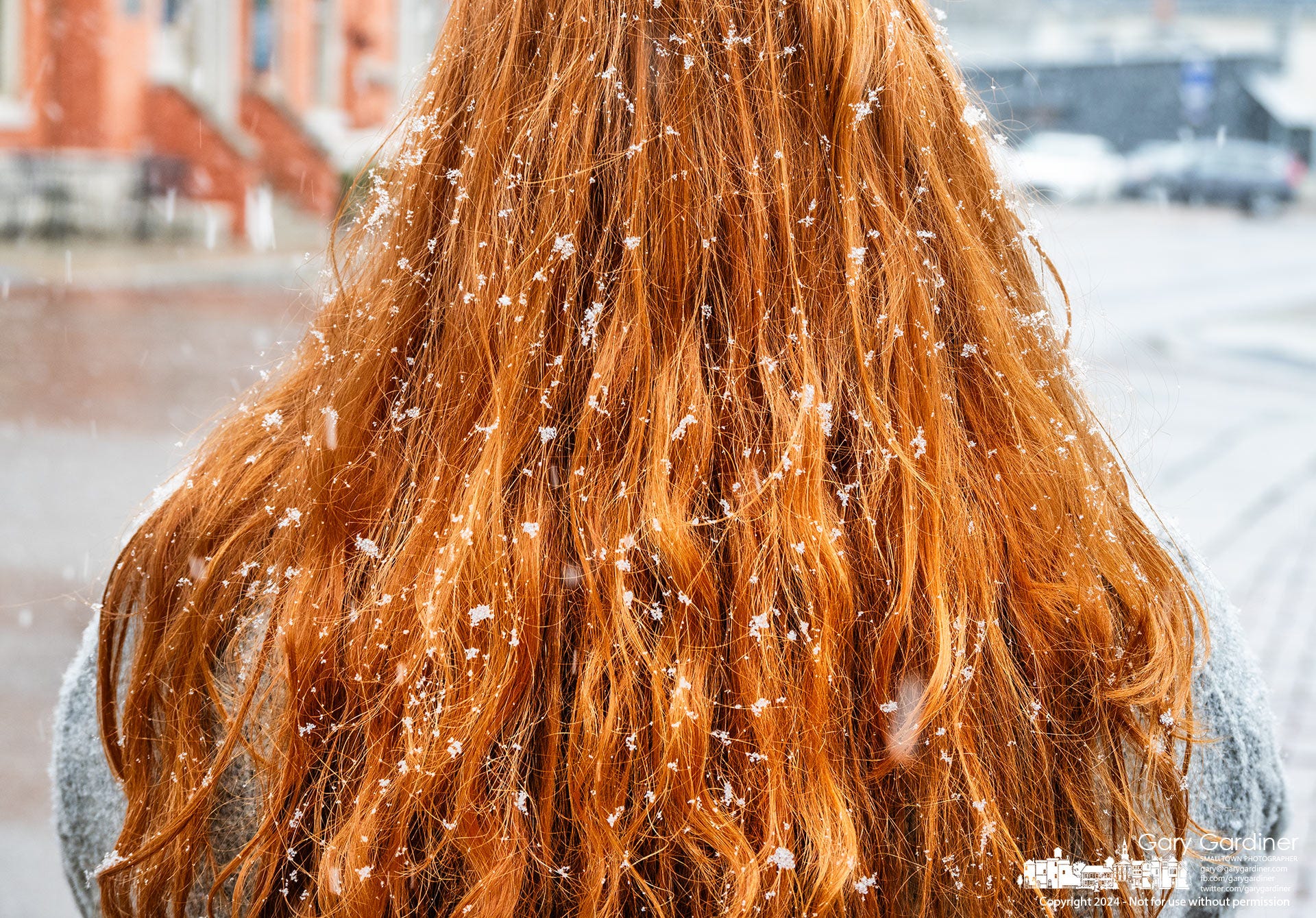
Snow falling into red hair. No face. No visible expression. No event beyond weather and color and the simple fact of someone standing in it. The photograph worked because it did not need any additional work. It did not need a larger explanation or a more dramatic gesture. It only needed to be seen and accepted for what it was. There is a kind of discipline in that, too, maybe a harder one. To recognize when the world has already arranged the photograph and when all a photographer has to do is not interfere.
Then there are moments when the world offers something stranger.
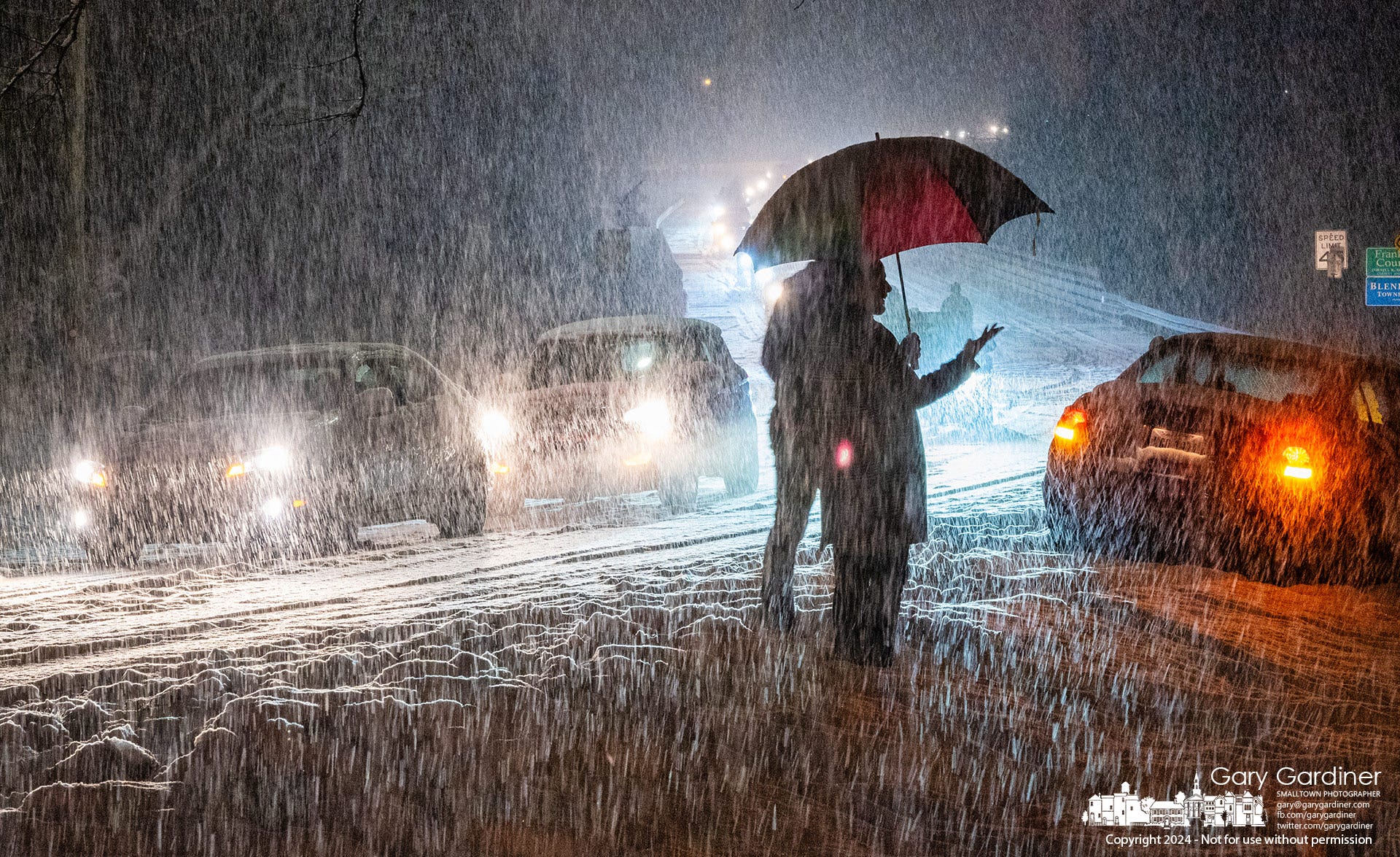
A crash scene on a snowy night. Headlights and taillights diffused through blowing snow. Cars at wrong angles. The road is uncertain for everyone. In the middle of it, two figures under an umbrella, one gesturing toward the car. The whole scene was trouble, interruption, cold, and hazardous. But there was also a brief calm in it, something almost lyrical. Not because the crash was less real, and not because beauty excuses danger, but because the weather and the light and the human gestures came into alignment for an instant. The umbrella gathered them into a dark shape against the whitened road. Snow turned headlights into atmosphere. What was chaotic in life became, for a second, coherent in the frame.
That is another way of being there.
Not every photograph asks the same thing of the photographer. What unites them is not aperture. It’s practiced presence. Some rely on catching a subtle shift in light. Some need to see that the simplest thing is already whole. Some require holding steady in confusion, long enough to see that even trouble has form. Practiced presence comes from returning to trust small moments, learning not to overlook the ordinary, and staying with the world until it reveals how a picture wants to be made.
That is why I have always thought “being there” should lead the phrase.
F/8 reminds you to master your craft so it doesn’t hinder your work. But craft is just the start. Deeper work is learning to arrive fully, remain open, and know when a scene asks for attention, restraint, or patience. A camera can be set instantly; seeing takes longer. It demands more of the photographer. It asks for a presence deep enough for the world to reveal not just what happens, but what kind of photograph it offers.

My Final Photo News is a reader-supported publication. To receive new posts and support my photography and commentary, become a free or paid subscriber. Subscribe to The Westerville News and PhotoCamp Daily.