
Before the internet changed retail, Black Friday was a physical ritual. It was contained in the paper. Every Thanksgiving morning, you could gauge a city’s shopping eagerness by the weight of the newspaper thudding onto the porch. The ad inserts made the whole thing swell until it felt like a holiday doorstop. Electronics, appliances, toys, and all sorts of unbelievable bargains were spread across page after page. People circled items with a pen. They crafted strategies at the kitchen table. It wasn’t browsing. It was reconnaissance.
Stores embraced scarcity, offering limited quantities and opening their doors at hours when most people were still asleep. A computer slashed prices so drastically that the store relied on the crowd itself to cover the loss. Some large retailers even had their marketing teams buy certain loss-leaders outright with marketing budgets, then assign special SKU codes so the deep discounts wouldn’t appear as damage to the company’s bottom line. On paper, the item appeared as a promotional expense, not a retail catastrophe. In advertisements, it looked like a once-a-year miracle. And outside in the cold, it worked. People lined up for those bargains because they suspected they might never see them again.
Groups formed on Thanksgiving afternoon. Friends and families compared lists across turkey and pie, deciding who had the best chance of grabbing which item at which store. They split up across town like teams on a mission. Someone might buy an item they had no interest in because someone waiting at a different store needed it. For many, the morning wasn’t just about saving money. It was about walking away with a victory the whole group could share.
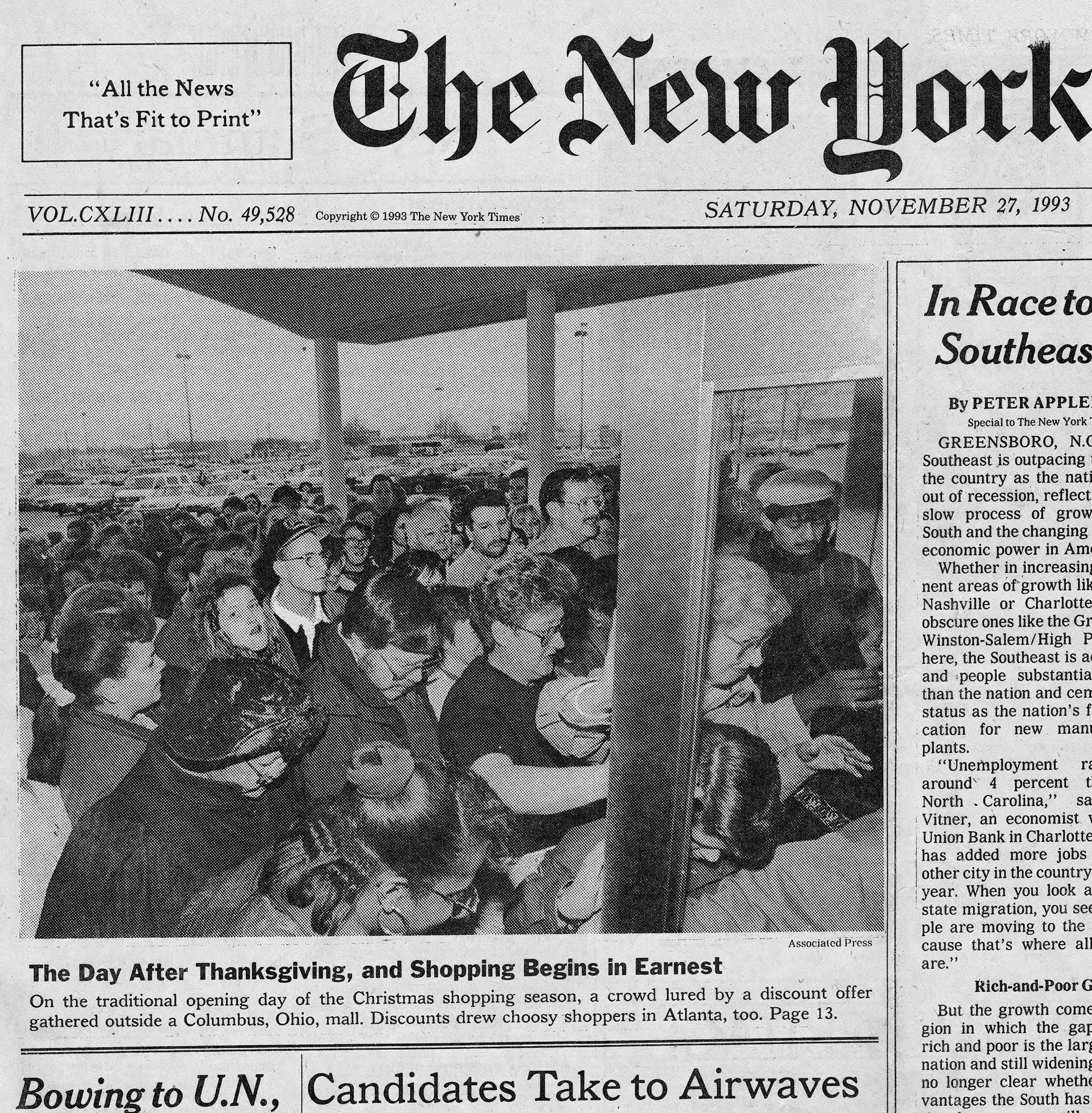
I experienced this culture firsthand. In 1993, I photographed the Black Friday opening at the Lazarus store in Northland Mall. I climbed onto a trash can with a 20mm lens and on-camera flash to get above the crowd. When the doors opened, the line surged all at once. A single frame from that moment appeared on the front page of The New York Times. It captured the frenzy. But more than that, it showed commitment. People weren’t just shopping. They were participating.
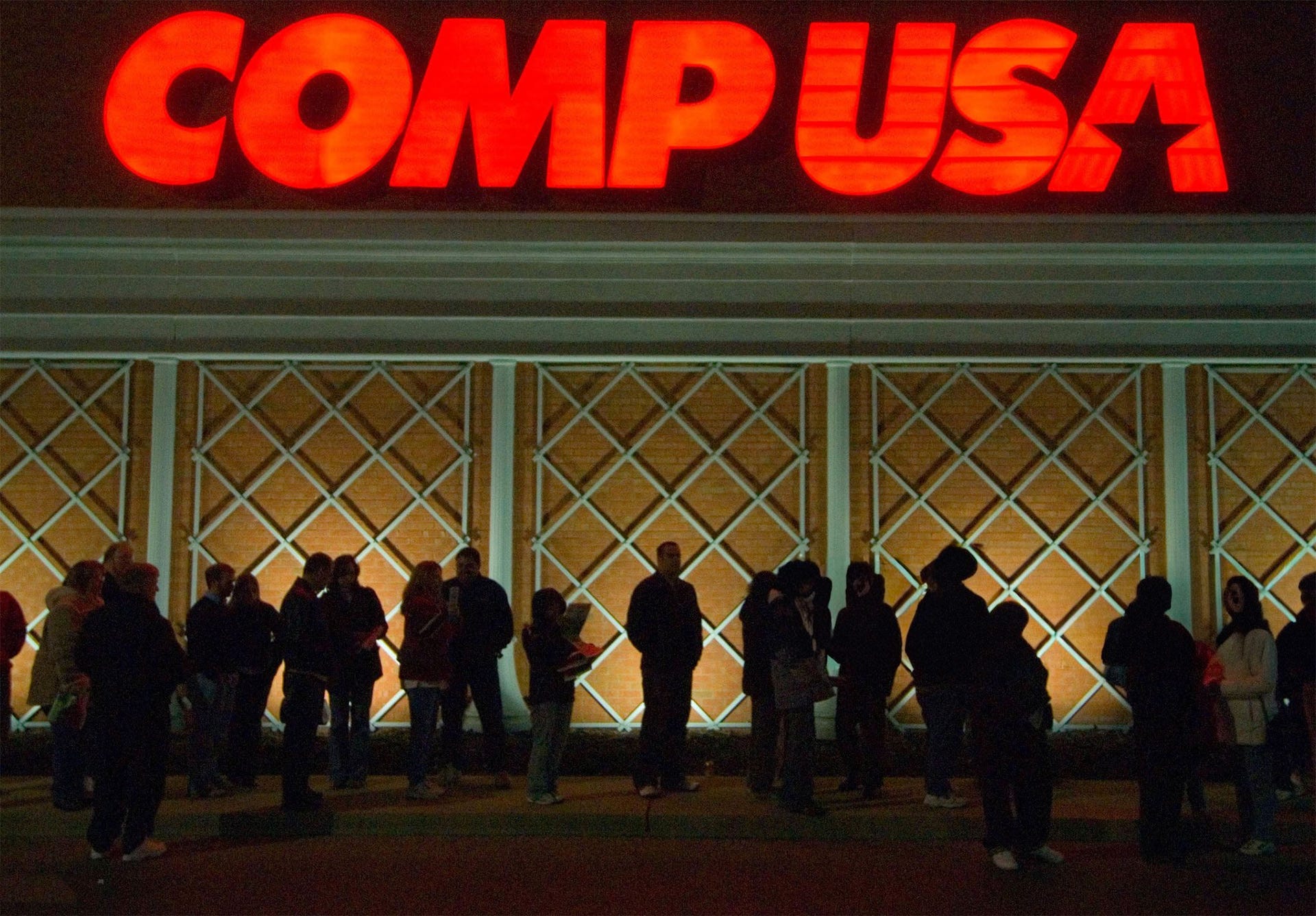
By the mid-2000s, the tone started to change. Retailers who once protected the sanctity of that early morning rush began to extend their hours into Thanksgiving night. CompUSA was one of the first to push the limits. In 2006, I photographed one of their Thanksgiving-night openings. It felt like witnessing an old tradition being pushed out of place.
People still queued long before the doors opened, their breath visible in the cold air. But the crowd wasn’t as lively as the morning groups I had photographed a decade earlier. There was a sense of obligation in the line, as if the calendar had been rewritten without anyone’s vote. Families who would have been resting after dinner now stood under neon signs, waiting for a discounted laptop or a pile of tech accessories they weren’t sure they needed. CompUSA’s glowing red logo hovered over the scene like a deadline.
The energy inside also felt different. The old Black Friday crowds burst in at dawn with a kind of earned excitement. But this felt forced. The shoppers had arrived, but the moment no longer seemed like it belonged to them. It felt like the beginning of a slow decline, the point where competition among retailers started to drain the event’s communal spirit.
Then the shift gained momentum. Newspaper ads shrank. Online deals lasted days instead of hours. Black Friday extended into a full week. The lines grew thinner. The cold mornings cleared out. The tradition faded away.
What replaced it was quieter and much more fragmented. Influencers began shaping shopping habits through curated lists tailored to specific audiences. Affiliate links turned recommendations into sources of income. Even historic institutions got involved. The New York Times developed Wirecutter into a recommendation platform driven by affiliate sales. Editorial authority and commercial interests began to coexist.
Black Friday still appears on the calendar, but the experience feels completely different. There are no groups gathering in parking lots. No frantic rush that once seemed like a yearly burst of energy. There’s no trash can to stand on anymore because there are no crowds to notice.
The deals stay the same. The urgency fades. What used to feel like a nationwide event shared by millions now happens quietly, lit only by the glow of a phone screen. A different kind of bargain, but not the same kind of story.

My Final Photo News is a reader-supported publication. To receive new posts and support my photography and commentary, become a free or paid subscriber. Subscribe to The Westerville News and PhotoCamp Daily. My Final Photo News also recommends Civic Capacity and Into the Morning by Krista Steele.