
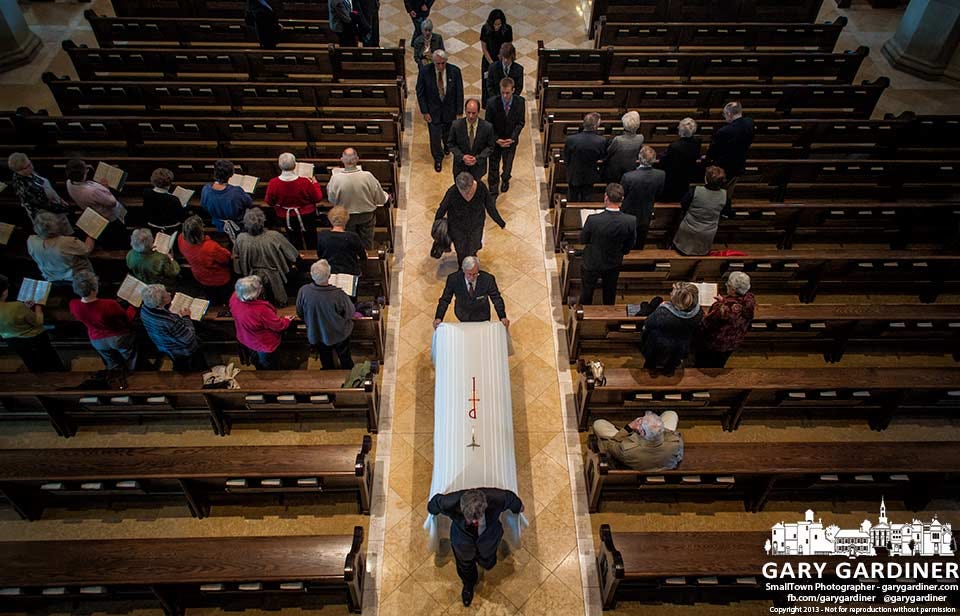
My wife sang in the funeral choir at our church, where she would learn about other people’s lives, their families, and the influences they had on others, too late to enjoy them while they're still living.
Eulogies are always gracious, with friends and family speaking about the transitional moments in relationships, how their lives were changed by the relationship, and how sorrow becomes the catalyst that brings them all together to remember another’s life.
That was the situation several years ago when my mother-in-law’s family gathered in the crisp cold of a North Dakota winter.
Family had gathered to celebrate the gentleness of a woman whose tumultuous life never betrayed her love for her children. We stood together, in tears, not afraid to speak of the good things, the moments of congratulations and celebration bequeathed to her children. A gift to pass along to the following generations without condition or regret.
Winter’s first snow changed the landscape ever so briefly, reminding me of that moment, when brothers and sisters, aunts, uncles, nieces, and nephews gathered to celebrate a life. We were in that moment of cold between death and resurrection when only memories brighten the day, and tears wash away the sadness. It’s a shame it sometimes takes the bitterness of death for us to celebrate the good in people’s lives.
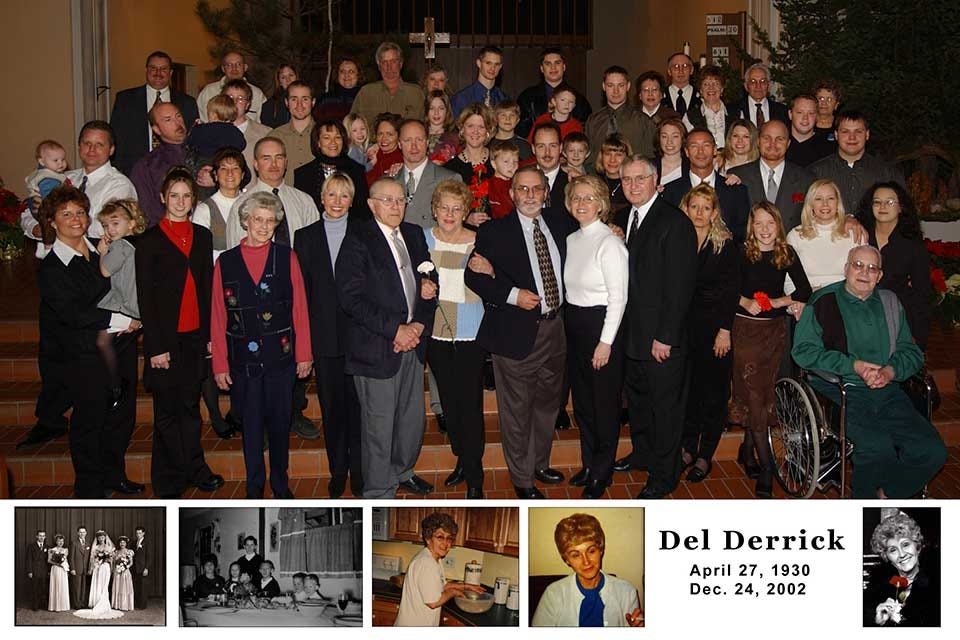
Several weeks ago, one of her daughters wrote on Facebook that it was the anniversary of her death and how much she was missed. Minutes late, I’d uploaded a photo of the family gathered at the church after her funeral. Everyone stood close together, joined in grief and joy.
Several years ago, the New York Times wrote about the elevation of obituary writers to lofty news writing icons. The task once detailed to the lowest of copywriters is now a much sought-after job where style is measured beyond the ability to lace a linear timeline into a cohesive description of life passed.
My mother never trusted obituary writers, even the ones who wrote the succinct one-column catalogs published only in the local paper, accompanied by a photo from an undetermined date to best illustrate the best day of their life.
She didn’t want her life’s catalog to omit anyone, any critical event, or any family connection, no matter the status. To make sure, she wrote her own obituary.
It’s difficult to say, but she was fortunate to know death was near. She had survived an earlier fight against cancer but understood her second battle, worsened by a heart problem, was one she wouldn’t win. She wasn’t eager to die but believed she would soon be with my dad, and that was all that mattered in the end.
Her obituary was perfect, completing a life of honor and dedication to family and friends.
During a conversation with my wife about obituaries, she asked if I would write my own, like my mother did, to ensure it was accurate and included everything important to me.
“My photography is my obituary,” was my answer.
The collection of 1/125th-of-a-second frames, including all the spot news, sports, features, portraits, landscapes, and snapshots, would speak for me at my death. I have no idea how many photographs I’ve taken, watching as the screen goes dark, and returns to brightness, revealing the moment after the photo I didn’t see.
I’ll never know how many people have seen my photographs. After more than 40 years of shooting for newspapers and The AP, followed by more than 20 years of photos in Westerville, there’s no way to know.
I do know about the lady behind my wife at the grocery store in Ft Lauderdale who talked with another customer about my photos in the previous day’s newspaper.
I do remember the father who greeted me with his phone, showing off the photos I’d taken of his son and saying he would never delete them.
I followed a woman to her car so she could show me the photo of her granddaughter that I had made, which was now attached to her dashboard with tape.
There are more stories than I can ever remember of people telling me about a photo I shot of them or a photo they saw published that affected them.
I got that response from mothers and fathers, sons and daughters, police officers and firefighters, a president, several governors and many politicians, kids, criminals, and death row inmates.
The common thread for all of them was my photography. It spoke to them and was now registered in their memory. At the lower corner was the credit line “Photo by Gary Gardiner.”
One of the plans for my funeral is to continue My Final Photo until the cold earth is lowered over the casket.
I’ve arranged with friends to set up a camera in my casket as if I’d just pulled it from my eye so they can see my final pose. As each passes the casket, the camera will shoot a frame and deliver it to the My Final Photo website. My obituary, at least the photo version, will continue after my traditional obituary is printed in the local paper.
Every day, as I prepare to create another photo for the My Final Photo project, I want to ensure that if it truly is my last photo, it is memorable. That it tells a story and is evocative. That it adds to the story of my life in a way others might be interested in vying to be the writer and photo editor for the New York Times, who will tell my story.
My son-in-law says my tombstone should read:
Here Lies Gary Gardiner – Photographer
“Pretend I’m Not Here”

My Final Photo News is a reader-supported publication. To receive new posts and support my photography and commentary, become a free or paid subscriber. Subscribe to The Westerville News and PhotoCamp Daily. My Final Photo News also recommends Civic Capacity and Into the Morning by Krista Steele.
Gary ... you stirred up a lot of memories with this wonderful piece. The first story I had published at my first newspaper job at the Lorain Journal in 1969 was an obituary. It's somewhere in my clips. As a small-town newspaper editor and staff writer, I wrote hundreds and hundreds of obituaries. It was an honor ..